
When people think about helping birds in winter, they usually think of food. But one of the hardest things for birds to find in freezing weather is open water. Once ponds, puddles, and streams freeze over, many birds have to travel long distances or rely on snow and ice for moisture, which costs precious energy.
A heated bird bath solves that problem and can quickly become the most popular spot in your backyard.
Why Birds Need Water in Winter
Birds need water for two main reasons:
Drinking
Birds lose moisture through breathing and digestion, even in cold weather. Eating snow is possible, but melting it inside their bodies uses energy that they need to stay warm.
Feather Care
Clean feathers are essential for insulation. Birds bathe to remove dirt and oil, then preen their feathers back into place. Well-maintained feathers trap air and keep birds warm on cold nights.
You might be surprised to see birds bathing on a cold January afternoon, but it is completely normal. A heated bath gives them a safe, reliable place to do it.
Birds You May Attract
A heated bird bath often attracts birds that rarely visit seed feeders, including:
- American Robins that overwinter in the area
- Eastern Bluebirds
- Cedar Waxwings
- Northern Mockingbirds
- Woodpeckers, chickadees, cardinals, and finches
For many birders, a heated bath brings new species to the yard for the very first time.
How Heated Bird Baths Work
Most heated bird baths have a built-in, thermostatically controlled heating element. The heater turns on only when temperatures approach freezing and turns off when it warms up. The goal is not to make the water warm, just to keep it from freezing.
Heated baths come in several styles. Browse our heated bird baths to compare options.
Deck or Rail-Mounted Baths
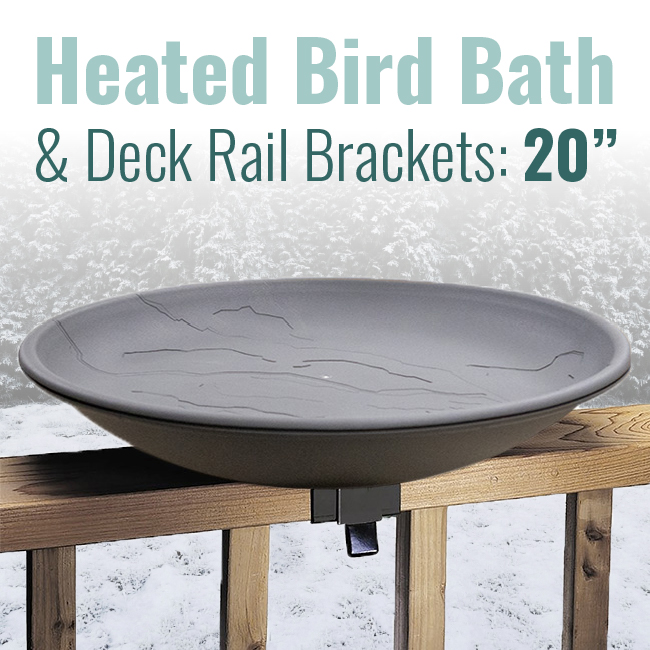
These clamp onto a deck railing and are easy to reach for refilling and cleaning. They are a great choice if your outlet is near a deck or patio.
Pedestal Baths
Pedestal baths sit on a stand and look like traditional garden bird baths. They provide a classic look while keeping water open all winter.
Ground-Level Baths
Low baths placed on the ground or on a short stand appeal to robins, doves, and other birds that prefer to drink close to the ground.
Heaters and De-Icers
If you already own a bird bath you love, a separate de-icer or heating element can often be added to it. Be sure the de-icer is designed for bird baths and is compatible with the material of your bath.
What to Look For
- Thermostat control – Saves energy and keeps the heater from running unnecessarily.
- Shallow depth – Two inches or less at the deepest point is ideal for songbirds.
- Textured surface – Gives birds secure footing.
- Weather-rated cord – Should be designed for outdoor use.
- Easy cleaning – A removable basin makes winter cleaning much simpler.
Placement Tips
- Place the bath within reach of a grounded outdoor outlet, using an outdoor-rated extension cord if needed.
- Position it about 10 to 15 feet from shrubs so birds can escape predators quickly.
- Choose a spot you can see from a window so you can enjoy the activity.
- Keep it away from areas where snow from the roof might slide down.
Keep It Clean
Birds visit heated baths heavily in winter, so the water can get dirty quickly. Refresh the water every few days and scrub the basin regularly. Avoid antifreeze or chemical additives of any kind, which are dangerous to birds.
Safety Reminders
- Always follow the manufacturer’s instructions for use and power.
- Do not use an indoor extension cord outdoors.
- Keep the bath filled. Running some heated baths dry can damage the heater.
Frequently Asked Questions
Does a heated bird bath use a lot of electricity?
Most heated bird baths use a thermostat that only runs the heater when the water is near freezing, so they are not running constantly. Exact usage depends on the model and how cold your winter is, so check the wattage listed by the manufacturer.
Will birds bathe in winter and get too cold?
Birds are good at judging conditions. They usually bathe on milder or sunny winter days and quickly preen and fluff their feathers afterward. Clean feathers actually insulate better, so bathing helps them stay warm.
Can I leave my ceramic or concrete bath out in winter?
Water expands as it freezes and can crack ceramic, glass, and some concrete baths. Empty and store fragile baths for winter, and use a heated bath or a bath made of freeze-tolerant material instead.
Where should I put a heated bath if my outlet is far away?
Use a heavy-duty, outdoor-rated extension cord plugged into a GFCI outlet, and run it where it will not be a tripping hazard or be damaged by shovels or snowblowers.
A Simple Upgrade With a Big Payoff
Adding a heated bird bath is one of the easiest ways to help backyard birds survive winter and to see more of them. Pair it with a few well-stocked feeders, and your yard can become a winter hot spot for birds in your neighborhood.
Explore the Rustic Feathers bird bath collection to find a heated bath or accessory that fits your space.