
Few sights in the backyard are as striking as a bright red Northern Cardinal perched against fresh snow. Cardinals are year-round residents across most of the eastern and central United States, which means that once you attract them, you can enjoy them every season. They are also one of the easiest birds to bring to your yard with the right food and setup.
Getting to Know the Northern Cardinal
The male Northern Cardinal is famous for his brilliant red plumage, pointed crest, and black mask around a thick orange-red bill. The female is just as beautiful in a more subtle way, with warm tan-brown feathers, red accents on her wings, tail, and crest, and the same bright bill.
Cardinals do not migrate. Pairs often stay together through the year and defend a territory during the breeding season. In fall and winter, they become more social and sometimes gather in small flocks, which is why you may suddenly see several cardinals at once around your feeders when the weather turns cold.
Their Song
Cardinals are one of the few songbirds in North America where the female sings as well as the male. Listen for their clear, whistled phrases that sound like “cheer, cheer, cheer” or “birdie, birdie, birdie.” They also give a sharp metallic “chip” call, which is often the first clue that a cardinal is nearby.
What Cardinals Eat
In the wild, cardinals eat a mix of seeds, fruit, and insects. In your backyard, they have a few clear favorites:
- Black oil sunflower seed – A reliable choice that most cardinals will eat readily.
- Safflower seed – Often called the cardinal’s favorite. It has the added bonus of being less popular with squirrels, grackles, and starlings.
- Striped sunflower seed – Larger seeds that their strong beaks handle easily.
- Cracked corn and white millet – Useful when scattered on a platform or low tray.
- Fruit – Cardinals will eat berries and chopped fruit, especially in winter.
The Best Feeders for Cardinals
Cardinals are fairly large songbirds, and they prefer to perch comfortably while they eat. They are not as acrobatic as chickadees or finches, so small tube feeders with tiny perches are not ideal for them.
Hopper Feeders
Hopper feeders with wide ledges are one of the best choices for cardinals. They give the birds plenty of room to land and face the seed while they eat.
Platform and Tray Feeders
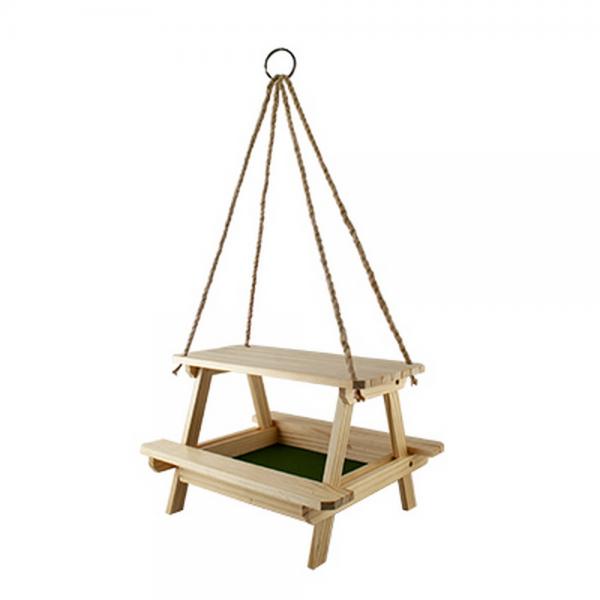
Cardinals often feed on or near the ground. A platform or tray feeder mounted low or on a post gives them the open, stable feeding surface they like. Look for good drainage so seed stays dry.
Large-Perch Feeders
Some feeders are designed with ring perches or extended trays that suit larger birds. These work well if you want to welcome cardinals while still using a hanging feeder.
Browse our full selection of bird feeders to find styles that suit cardinals and your yard.
Where to Place Feeders for Cardinals
Cardinals are cautious. They like to feel protected while they eat and often visit feeders early in the morning and again near dusk. To make them comfortable:
- Place feeders near dense shrubs, hedges, or evergreens where they can retreat quickly.
- Keep feeders about 10 to 12 feet from cover so predators cannot ambush them.
- Mount feeders around eye level or lower, since cardinals prefer to feed close to the ground.
Water Matters Too
Cardinals drink and bathe regularly. A bird bath with a shallow, gently sloping basin is very attractive to them, and a heated bath in winter can make your yard stand out when other water sources are frozen.
Nesting Habits
Cardinals do not use enclosed birdhouses. Instead, they build cup-shaped nests in dense shrubs, thickets, and vines, usually a few feet off the ground. If you want cardinals nesting in your yard, plant native shrubs such as dogwood, viburnum, or serviceberry, and leave some thick, tangled areas where they can hide a nest.
Fun Facts About Cardinals
- Male cardinals sometimes attack their own reflections in windows during breeding season, thinking it is a rival.
- During courtship, the male will often feed the female seed beak to beak.
- The cardinal is the state bird of seven states, including Illinois.
- Their bright red color comes from carotenoid pigments in the foods they eat.
Frequently Asked Questions
Why do cardinals visit my feeder so early and so late in the day?
Cardinals are often the first birds at feeders in the morning and the last ones there at dusk. Low light gives them some cover from predators, and feeding at the edges of the day helps them refuel after a cold night and stock up before the next one. If you mostly see cardinals at dawn and dusk, that is completely normal.
Why does a cardinal keep attacking my window?
In spring, male cardinals defend their territory aggressively. When one sees its reflection in a window or car mirror, it thinks it is a rival and attacks. The behavior is harmless to your window but tiring for the bird. Break up the reflection with decals, screens, or a temporary cover on the outside of the glass until the behavior stops.
Will cardinals use a birdhouse?
No. Cardinals build open cup nests in dense shrubs, vines, and small trees. The best way to encourage nesting is to plant thick native shrubs and leave some tangled areas in your yard.
Why do I see a cardinal with a bald head?
Occasionally in late summer, you may see a cardinal with a bare, dark head. This is usually the result of an unusual molt or feather mites, and in most cases the feathers grow back within a few weeks.
Bringing Cardinals Home
With safflower or sunflower seed, a sturdy hopper or platform feeder, nearby cover, and a dependable water source, you can enjoy cardinals in your yard every day of the year. Explore the Rustic Feathers collection to set up a feeding station that this backyard favorite will love.