
Downy and Hairy Woodpeckers are two of the most common woodpeckers at backyard feeders in the Midwest. They are also two of the most frequently confused birds. At a quick glance, they look almost exactly alike, with black-and-white patterns, a white stripe down the back, and a small red patch on the males.
Once you know what to look for, though, telling them apart becomes much easier.
The Quick Answer: Look at the Bill
The single most reliable way to separate these two species is bill length.
- Downy Woodpecker: A short, stubby bill that is much shorter than the length of its head.
- Hairy Woodpecker: A long, chisel-like bill that is nearly as long as its head.
If the bill looks tiny and delicate, it is probably a Downy. If it looks long and powerful, it is likely a Hairy.
Size Differences
- Downy Woodpecker: About 6 to 7 inches long, roughly the size of a House Sparrow. It is the smallest woodpecker in North America.
- Hairy Woodpecker: About 9 to 10 inches long, closer to the size of a robin.
Size can be tricky to judge without a comparison, but if both visit your feeder at the same time, the difference is obvious.
Outer Tail Feathers
Look at the white outer tail feathers:
- Downy: The white outer tail feathers usually have a few black spots or bars.
- Hairy: The white outer tail feathers are typically clean white with no spots.
This mark can be hard to see, but it is helpful when you get a good look or a photo.
Behavior Clues
- Downy Woodpeckers are often found on smaller branches, weed stalks, and even goldenrod stems. They readily visit suet feeders and are common in suburban yards.
- Hairy Woodpeckers tend to forage on larger tree trunks and main branches. They are often more wary and may prefer yards with mature trees.
Voice
Both species give a sharp “pik” call, but the Hairy’s is louder and sharper. Downy Woodpeckers also give a descending whinny call, while Hairy Woodpeckers give a rattling call that stays on one pitch.
Quick Comparison Chart
| Feature | Downy | Hairy |
|---|---|---|
| Length | 6–7 inches | 9–10 inches |
| Bill | Short and stubby | Long, nearly head-length |
| Outer tail feathers | Black spots | Clean white |
| Habitat | Small branches, yards, weeds | Large trunks, mature trees |
How to Attract Woodpeckers to Your Yard
Both species are year-round residents in much of the U.S., and both are easy to attract with the right foods.
Offer Suet
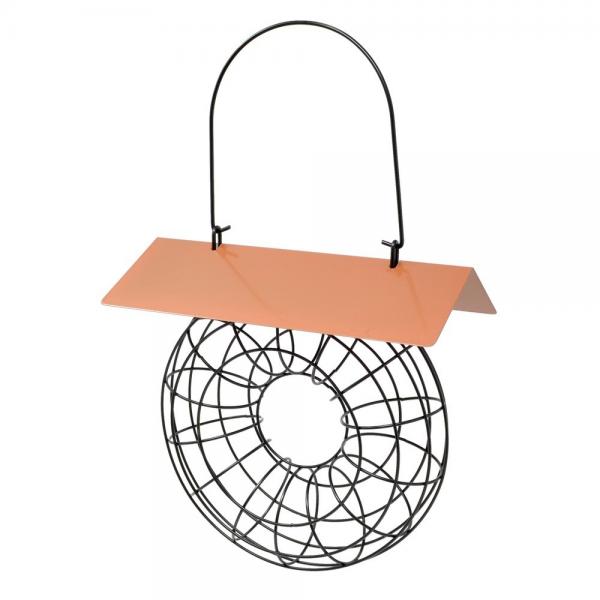
Suet is the number one woodpecker food. A simple suet cage can bring both Downy and Hairy Woodpeckers to your yard within days. Tail-prop suet feeders, which have an extended surface below the cage, allow woodpeckers to brace with their tails as they would on a tree.
Add Peanuts and Sunflower
Woodpeckers also eat:
- Shelled peanuts
- Black oil sunflower seed
- Sunflower hearts
- Seed cylinders and nut blends
Explore our bird feeder collection to find feeders that suit woodpeckers.
Keep Dead Trees When Safe
Woodpeckers forage and nest in dead or dying trees, called snags. If a snag is not a safety hazard to your home or walkways, consider leaving it standing.
Provide Water
Woodpeckers drink and bathe like other birds. A heated bird bath is a big draw in winter.
Other Woodpeckers You Might See
In the Midwest, you may also see:
- Red-bellied Woodpecker – Zebra-striped back and a red cap.
- Northern Flicker – Brown with black spots and a bright yellow or red underwing flash.
- Pileated Woodpecker – The largest, crow-sized woodpecker with a bold red crest.
- Red-headed Woodpecker – An entirely red head with bold black-and-white body.
Photographing Woodpeckers
Woodpeckers make great photography subjects because they tend to stay put while they feed. Hang suet near a natural-looking branch or post, and set up a few feet away with the sun behind you. A photo that shows the bill clearly is the best way to confirm whether you are looking at a Downy or a Hairy.
Frequently Asked Questions
Are Downy Woodpeckers damaging my trees?
Downy and Hairy Woodpeckers mostly forage for insects in dead wood and bark. They rarely harm healthy trees. In fact, they help control wood-boring insects. If you see many holes in neat rows, that is usually the work of sapsuckers, a different type of woodpecker.
Why is a woodpecker drumming on my house?
In late winter and spring, woodpeckers drum on loud surfaces to claim territory and attract mates. Gutters, siding, and chimney caps make excellent drums. Reflective tape, netting, or covering the area temporarily usually solves the problem.
Do woodpeckers use birdhouses?
Downy Woodpeckers occasionally roost in nest boxes in winter and sometimes nest in them, especially if the box is partially filled with wood shavings so they can “excavate.”
What is the best time of year to see woodpeckers at feeders?
Woodpeckers visit feeders year-round, but they are most frequent in fall and winter when insects are harder to find and suet is especially valuable.
Enjoy the Challenge
Learning to tell Downy and Hairy Woodpeckers apart is a fun milestone for any backyard birder. Put out suet this winter, grab your binoculars, and see which one visits your yard first.