
If one bird could be called the mascot of winter backyard birding, it might be the Black-capped Chickadee. These tiny, round birds seem to have endless energy, bouncing between branches and darting to feeders even on the coldest mornings. They are curious, bold, and often the first bird to discover a new feeder.
Identifying the Black-capped Chickadee
Chickadees are small birds, only about five inches long, with a short neck and a large round head. Look for:
- A solid black cap and black bib
- Bright white cheeks
- A soft gray back and wings with white edging
- Buff or pale tan sides
In parts of the southern Midwest, you may also see the very similar Carolina Chickadee. The two species look nearly identical and even overlap in some areas, including parts of Illinois. The Black-capped tends to have brighter white edges on its wing feathers and a slower, lower song.
That Famous Call
The chickadee gets its name from its call: a cheerful “chick-a-dee-dee-dee.” Researchers have found that chickadees add more “dee” notes when they detect a more dangerous predator, which warns other birds in the area. Many other species, including nuthatches and woodpeckers, listen for chickadee alarm calls.
In late winter and spring, you will also hear their sweet two-note whistle, often described as “fee-bee.”
How Chickadees Survive Winter
For such a small bird, the chickadee is remarkably tough. It stays in cold northern climates all winter and has several clever survival strategies:
- Food caching: Chickadees hide thousands of seeds and insects in bark crevices and other spots during the fall, then remember where many of them are weeks later.
- Controlled hypothermia: On cold nights, they can lower their body temperature to conserve energy.
- Shivering: They generate heat by shivering throughout the night.
- Roosting in cavities: Chickadees sleep in tree holes, nest boxes, and dense cover to stay out of the wind.
Because they burn so much energy, chickadees must eat a lot every day, which is why they are such frequent feeder visitors.
What Chickadees Eat
At your feeders, chickadees love:
- Black oil sunflower seed – Their top choice. They often grab one seed, fly to a nearby branch, and hammer it open.
- Suet – High-fat food that helps them stay warm.
- Peanuts and peanut pieces – High in protein and fat.
- Mealworms – A favorite treat, especially in spring and early summer.
Best Feeders for Chickadees
Chickadees are acrobatic and comfortable at nearly any feeder type, which makes them easy to attract.
- Tube feeders with small perches suit them perfectly.
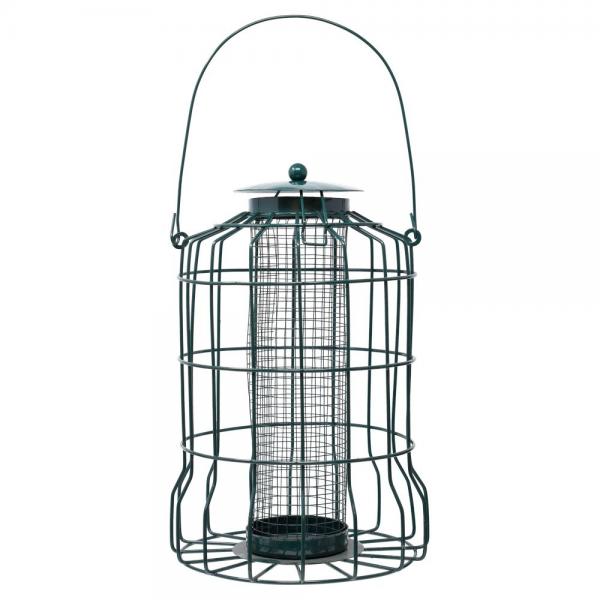
- Caged feeders let chickadees in while keeping larger birds and squirrels out.
- Suet cages are visited daily once chickadees find them.
- Hopper feeders work well too, especially those with smaller perches.
Explore our full selection of bird feeders to find a few that suit chickadees.
Chickadees and Nest Boxes
Chickadees are cavity nesters, which means they readily use birdhouses in spring. For chickadees, look for:
- An entrance hole about 1 1/8 inches in diameter
- A box mounted 5 to 15 feet off the ground
- A location near trees or shrubs, ideally with a few inches of wood shavings in the bottom
Putting up a nest box in late winter gives chickadees time to find it before nesting season. In winter, they may also use boxes for roosting at night.
Hand-Feeding Chickadees
Chickadees are one of the few backyard birds that can be trained to eat from your hand. With patience, try standing still near your feeder with sunflower seeds in your open palm. Over several days, a bold chickadee may land and take a seed. It is a memorable experience, especially for kids.
Fun Facts
- A chickadee’s brain grows new neurons each fall to help it remember where it stored food.
- Chickadees often lead mixed winter flocks that include nuthatches, titmice, and woodpeckers.
- The Black-capped Chickadee is the state bird of Maine and Massachusetts.
Frequently Asked Questions
Why do chickadees take one seed and fly away?
Chickadees prefer to eat in the safety of a nearby branch rather than sitting out in the open at the feeder. They also store extra seeds in bark and crevices to eat later, which is why they make so many quick trips back and forth.
Do chickadees migrate?
Black-capped Chickadees are year-round residents across most of their range. In some years, small numbers move short distances south, but most stay in the same area all winter.
How can I tell a Black-capped from a Carolina Chickadee?
It can be very difficult, especially where the two ranges meet. Black-capped Chickadees usually show brighter white edges on their wing feathers and a slower “fee-bee” song, while Carolina Chickadees have a faster, four-note song. Location is often the best clue.
Will chickadees use a nest box with other birds nearby?
Yes. Chickadees readily nest in yards with other birds and feeders, as long as the nest box is the right size and placed in a quiet spot near trees.
Bring Chickadees to Your Yard
Fill a feeder with black oil sunflower seed, hang a suet cage nearby, and keep fresh water available, and you will likely have chickadees visiting within days. Browse the Rustic Feathers collection for feeders and houses that welcome these cheerful little birds all year.